In short
- Recognized by UNESCO in 2012 for cultural significance.
- Powers the traditional Balinese Subak irrigation network.
- Flows past 11th-century temples like Gunung Kawi.
In this article
The Pakerisan River is more than a tubing destination. It is a vital part of the Cultural Landscape of Bali Province. The waterway sustains ancient farming cooperatives and links important historical landmarks.
Why does the Pakerisan River have UNESCO status?
The river watershed is part of the Cultural Landscape of Bali Province, recognized by UNESCO in 2012.
This designation protects the river's connection between the natural environment, spiritual beliefs, and agricultural practices. The water flows from sacred springs and sustains local farming communities.
How does the river support the Subak system?
The Pakerisan River provides crucial water for Bali's traditional cooperative irrigation network.
Farmers rely on this water to irrigate their terraced rice fields. The Subak system ensures fair water distribution across the region. Visitors can see these terraces during a 45-minute stop in the area.

Where does the Pakerisan River originate?
The river flows directly from the sacred springs of the Tirta Empul Temple.
Tirta Empul is a sacred water temple located in Tampaksiring. The springs here are famous for a traditional purification ritual. From these holy waters, the Pakerisan River begins its journey downstream.
What ancient temples are on the riverbanks?
Gunung Kawi is an 11th-century temple complex carved into the cliffs along the river.
This historical site features massive rock-cut shrines. To reach the temple, visitors must walk down over 300 steep stone steps into the river valley. The temple requires an entrance fee of approximately IDR 50,000.

Can you go tubing on this UNESCO river?
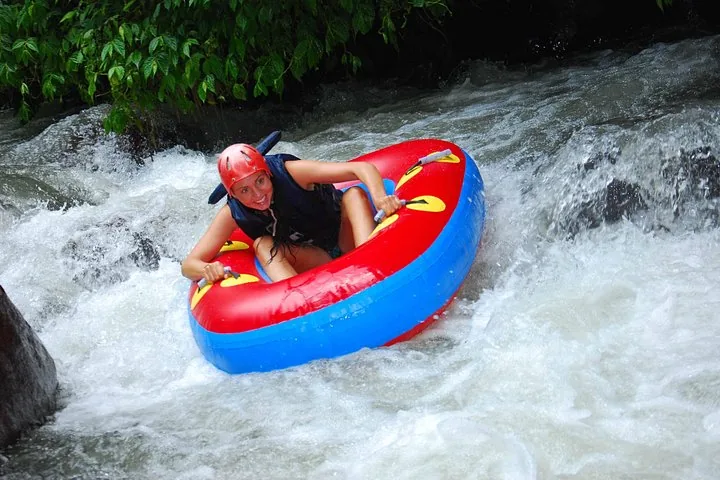
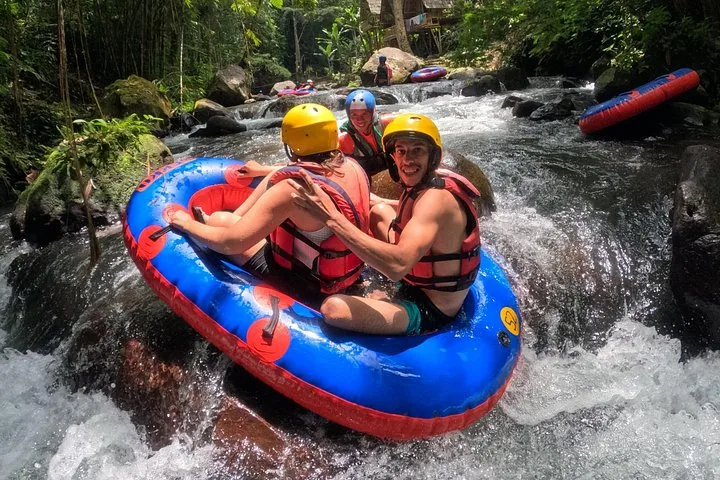
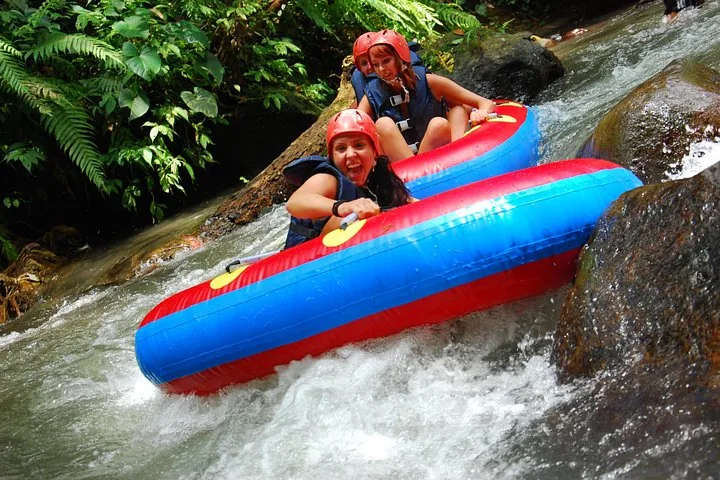
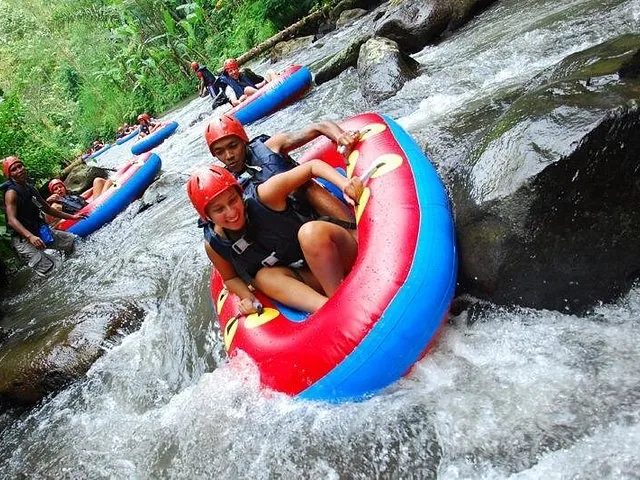
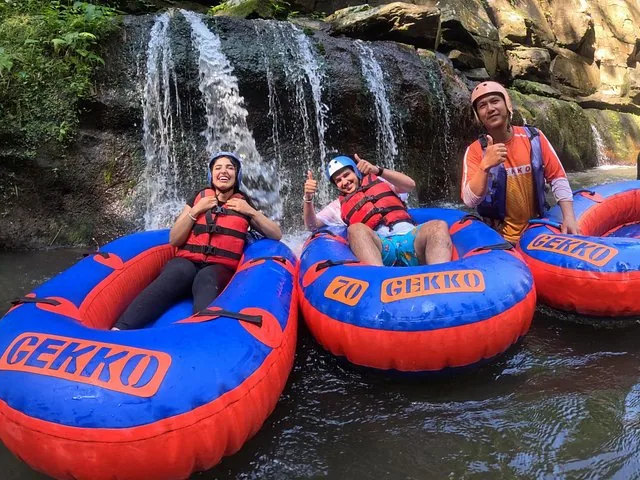
Yes, the river is a popular eco-tourism destination for gentle river tubing.
The standard tubing route covers 4.5 kilometers. It features Class II+ rapids and takes about 1.5 hours to complete. Tubers float past small waterfalls and lush tropical plants.
How do you visit the cultural sites along the river?
You can hire a private driver or join a tour to Tampaksiring.
A half-day private driver costs IDR 400,000 to IDR 600,000. This allows you to combine independent visits to Tirta Empul and Gunung Kawi with a tubing trip. You must wear a sarong and sash when entering the temples.

Questions travellers ask
Is the Pakerisan River part of a UNESCO World Heritage site?
Yes. The Pakerisan River watershed is included in the Cultural Landscape of Bali Province, which received UNESCO recognition in 2012.
What temples are located along the Pakerisan River?
The river originates at the Tirta Empul Temple. Downstream, it flows past Gunung Kawi, an 11th-century temple complex carved into the valley cliffs.
How much does it cost to enter the temples?
Access to historical sites like Gunung Kawi requires a temple entrance fee of approximately IDR 50,000.